

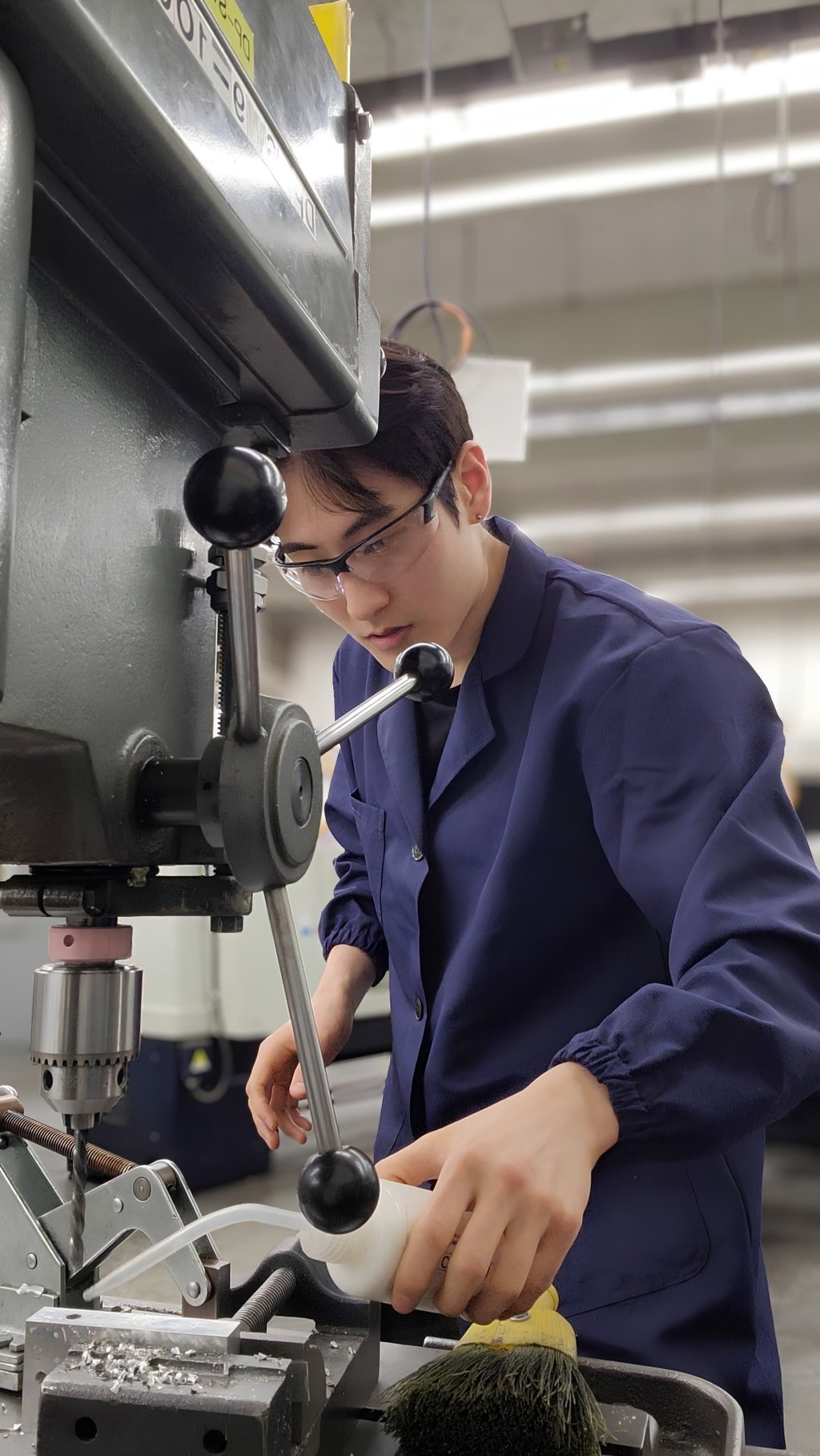
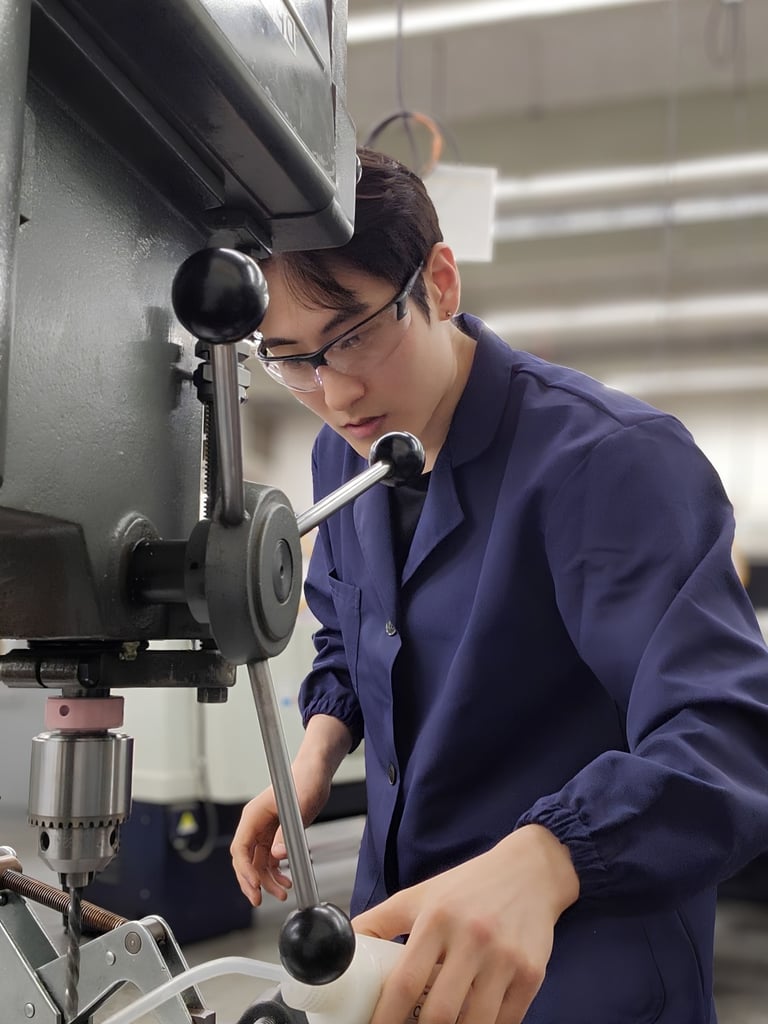
/ Robotics Developer in Training
Dain Kim
Bringing together hands-on experience, thoughtful design, and a commitment to getting things done properly.

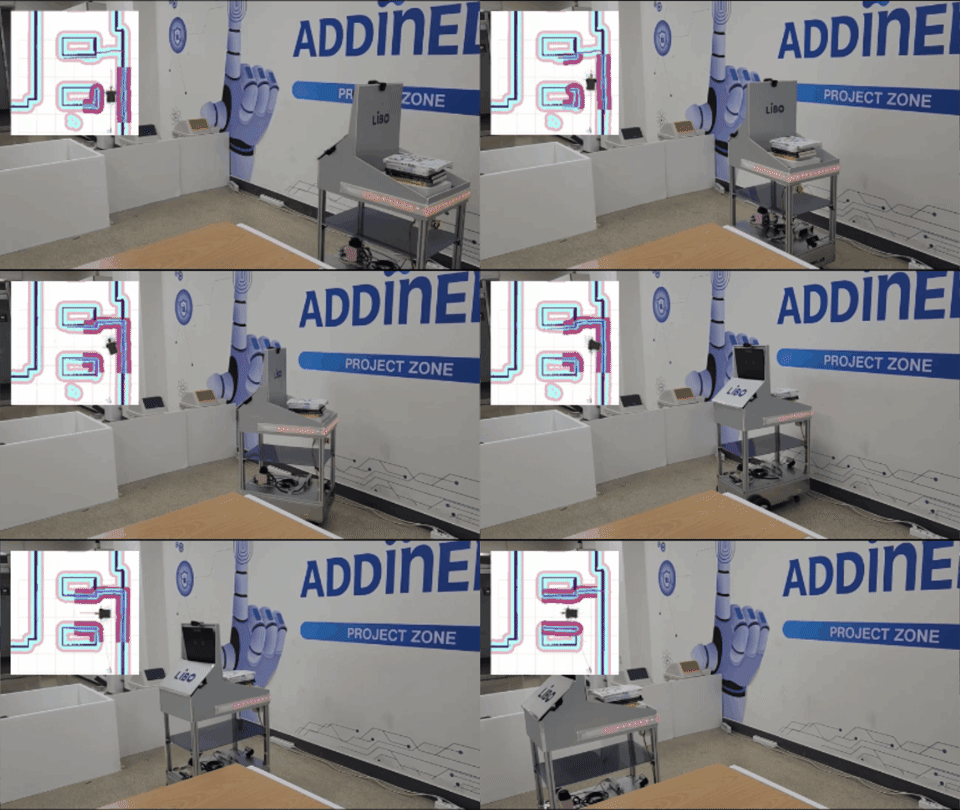
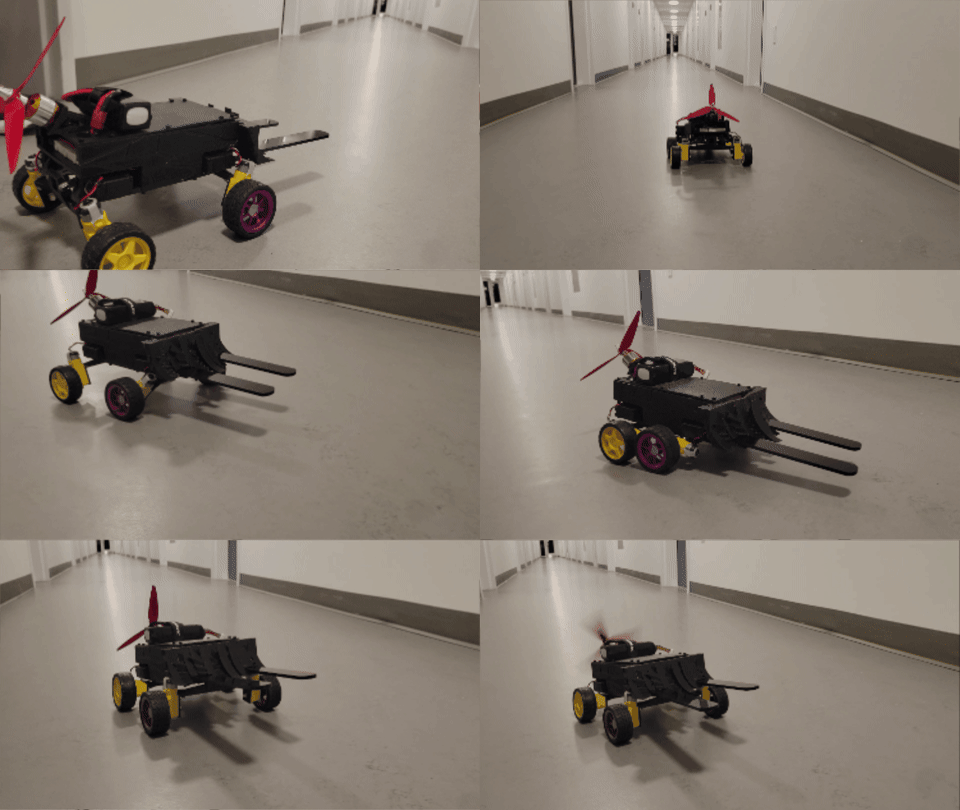
— Selected Work
Built. Tested. Documented.
System Design & Integration
Mechanical & Control System
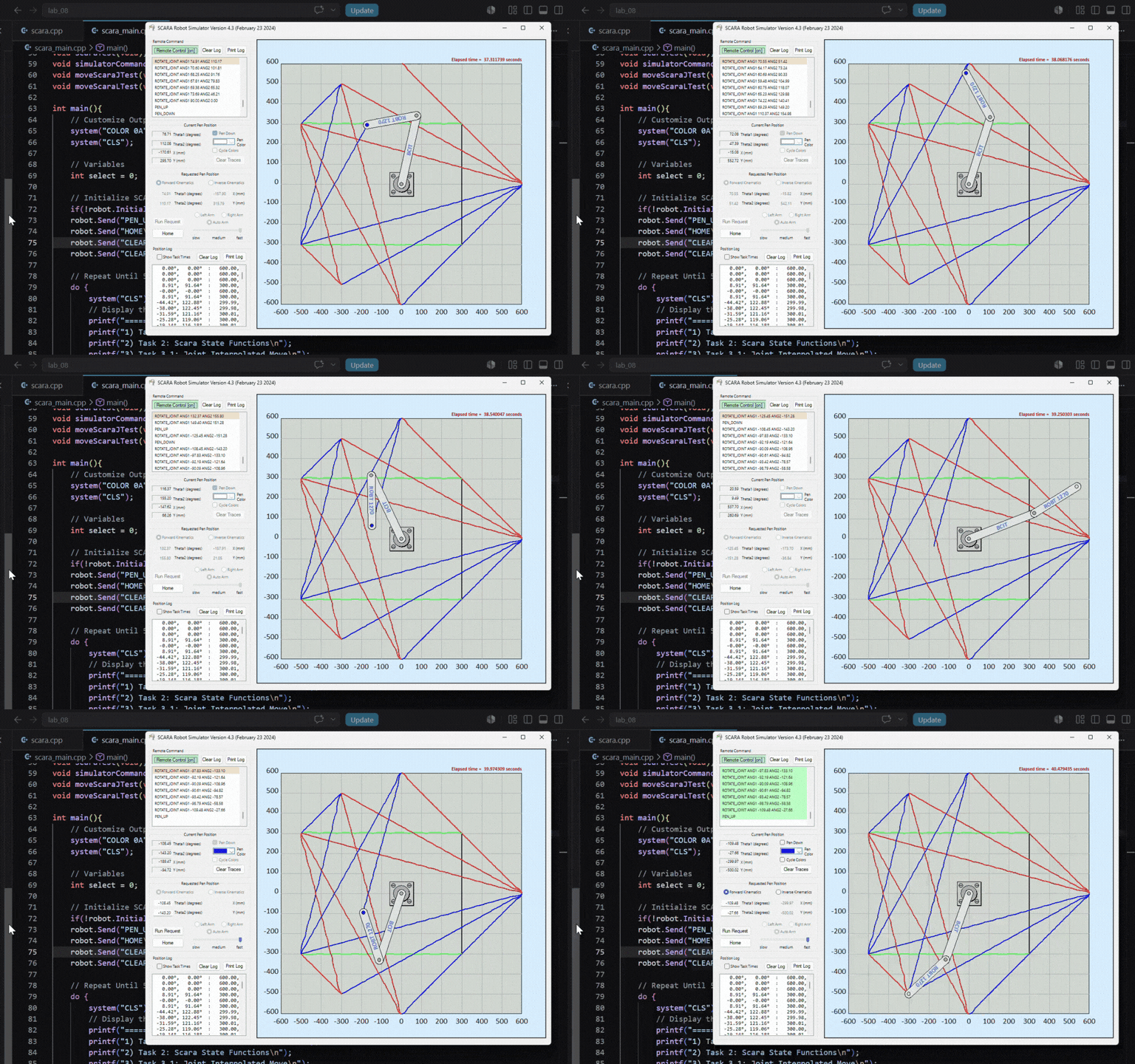
Implementing forward and inverse kinematics in C to translate user-defined X-Y coordinates into accurate joint-angle commands for a simulated SCARA robot.

Behind the Work
The work shows what I’ve built. If you want to know the background, principles, and path behind it, start here.
Control Systems
+ Technical Writing
Why I stopped trusting my PID simulation
The reasoning behind the build
Hardware introduced latency the sim never modeled. Here is what changed when I measured it directly and how I adjusted the loop gains accordingly.
Each post covers one specific decision: which approach, which constraint forced the choice, and what the data showed. Control systems, sensor fusion, mechanical design — written for engineers who want the details.
Sensor Fusion
Choosing between EKF and UKF on constrained hardware
The UKF converged faster but the sigma-point cost was too high at 100 Hz. A breakdown of the compute budget and why EKF won on this platform.