
COG Tactics: Building a Multi-Event RC Competition Robot
Table of Content
Challenge 1: Keeping the Project Moving Despite Limited Team Availability
Challenge 2: Fixing a Weak Mechanical Foundation Before Final Integration
Challenge 3: Turning Limited Hardware Into a Multi-Event Competition Robot
Project Timeline: Feb 2026 ~ Mar 2026
Introduction
Project Context
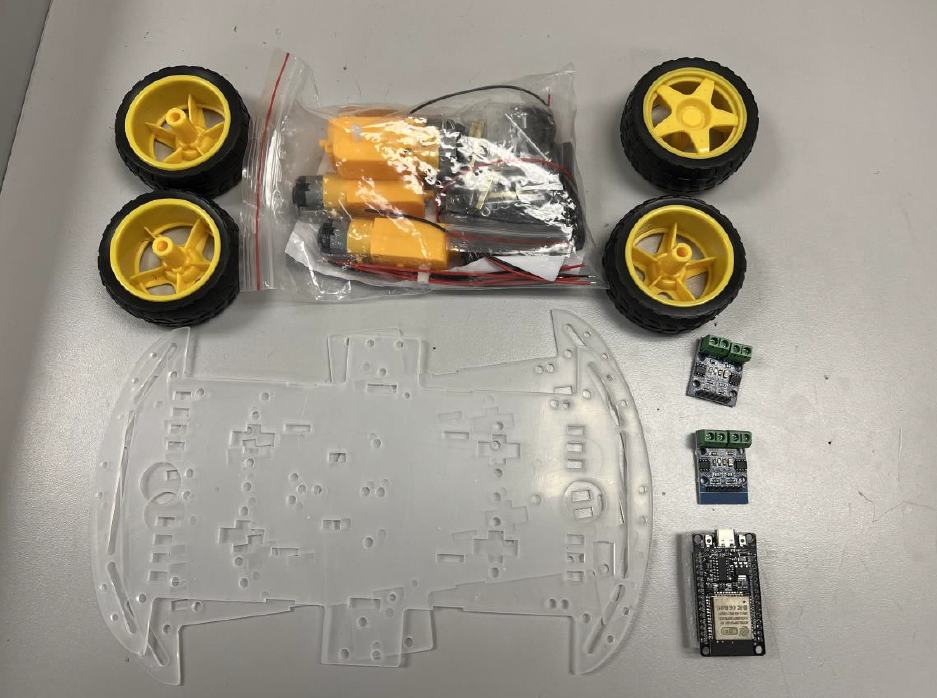
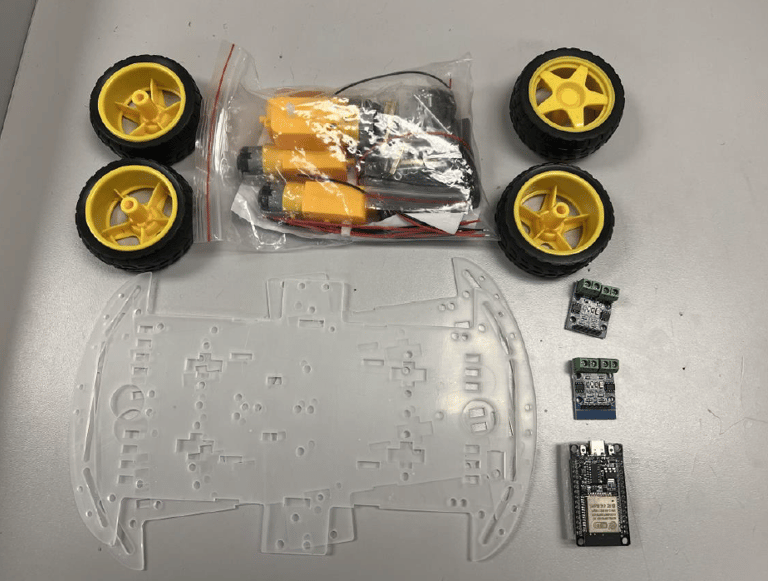
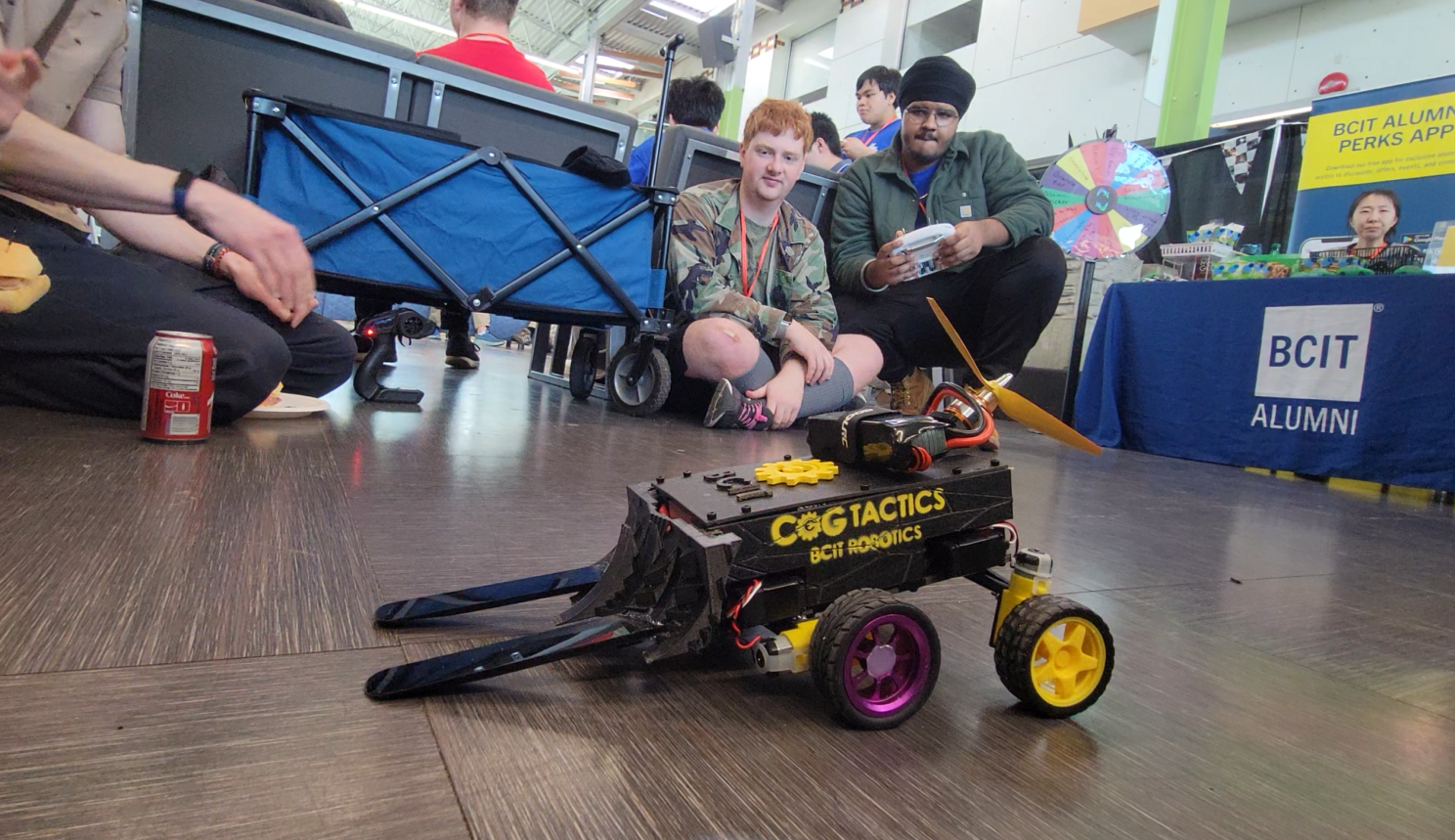
This project was developed for an RC robot competition hosted by the BCIT Robotics Club. Our team chose the standard category, which meant the robot had to be built using a limited kit with basic motors and wheels as the primary driving system.
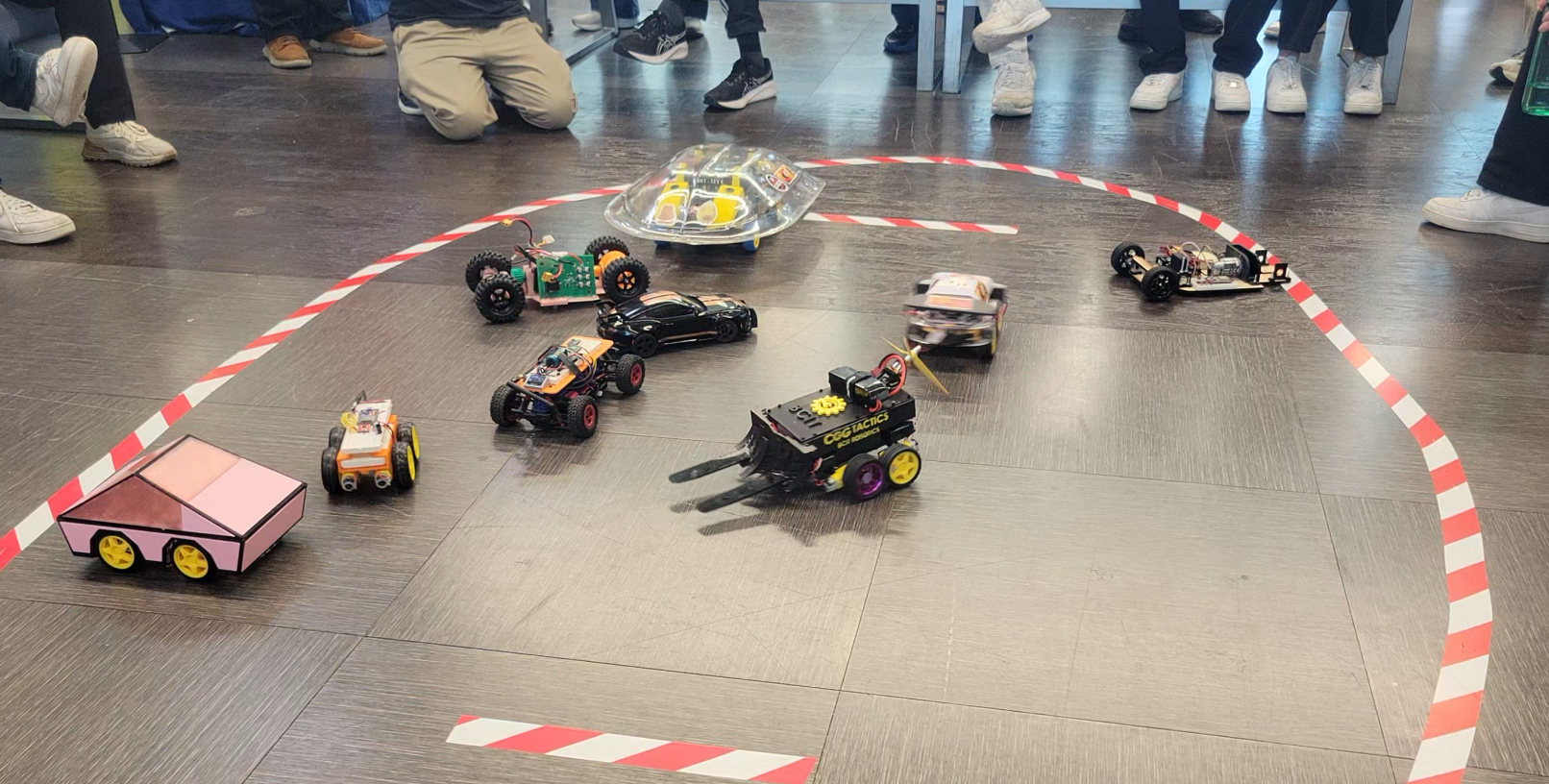
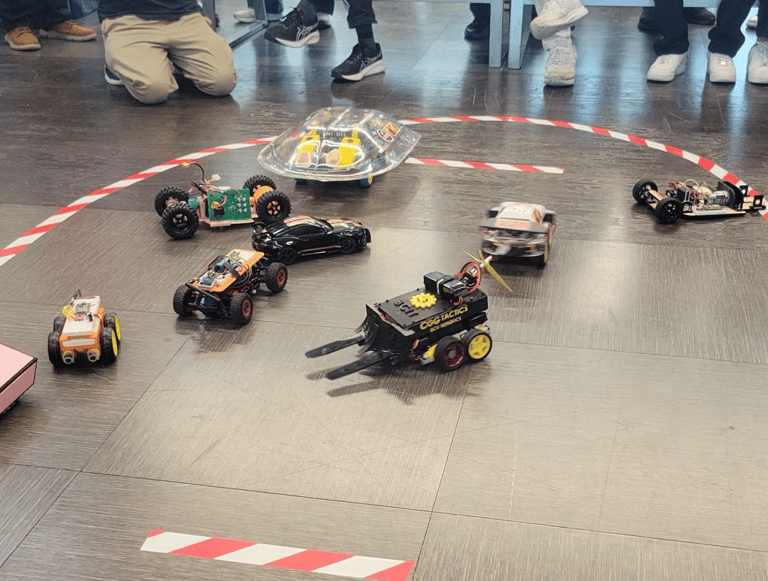
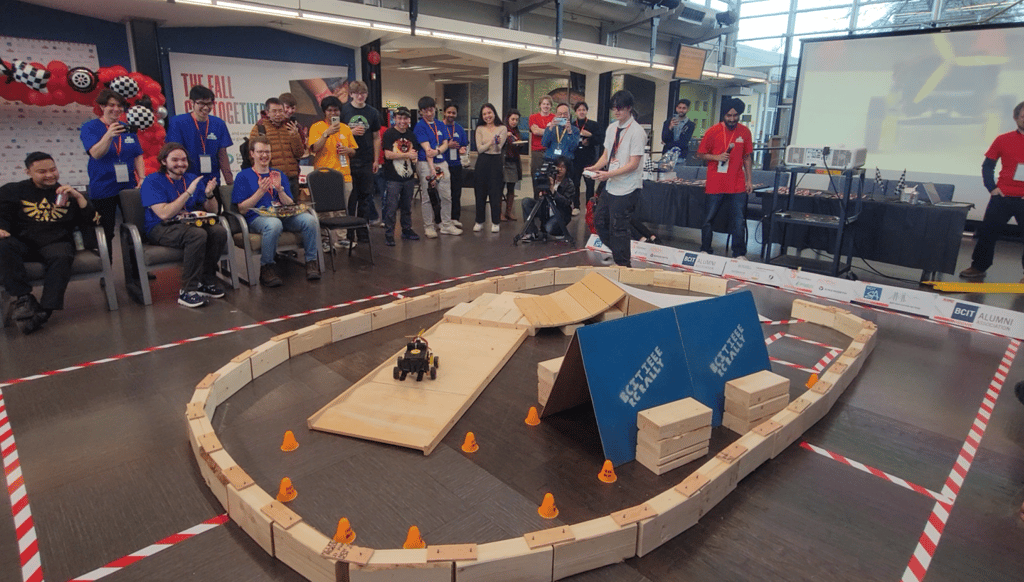
Our team decided to participate in three events: the obstacle course, the drag race, and the sumo battle. The goal was not simply to assemble a basic RC car, but to develop one robot that could compete across multiple event types.
Project Goal
My Role
I served as the team lead, organizing the team, facilitating project direction, and overseeing overall progress.
Challenge 1: Keeping the Project Moving Despite Limited Team Availability
Working Around a Side-Project Commitment Level
Because this competition project happened during a heavy BCIT term, academic work still had to remain the team’s priority. This meant that the limited time available for the project had to be used carefully, and each hour of effort needed to translate into meaningful progress.


Turning Scattered Interest Into a Shared Direction
The team had initial enthusiasm, but I knew that interest could fade quickly if it did not turn into visible progress. To build early momentum and give the team a clearer direction, I used:
focused meetings to keep discussions tied to decisions and next steps
Draw.io and mind maps to organize design ideas visually
Jira to track tasks, priorities, and bottlenecks
Using these tools, I was able to clarify the goal and make the project status easier for the team to understand.
Keeping Progress Moving When Engagement Was Uneven
Given the limited timeline, school workload, and uneven team availability, my focus was on keeping the project on track. To do that, I:
kept communication concise
assigned manageable roles where possible
tracked bottlenecks
continued pushing the build forward when engagement was inconsistent
This helped prevent the project from losing direction even when team availability varied throughout the term
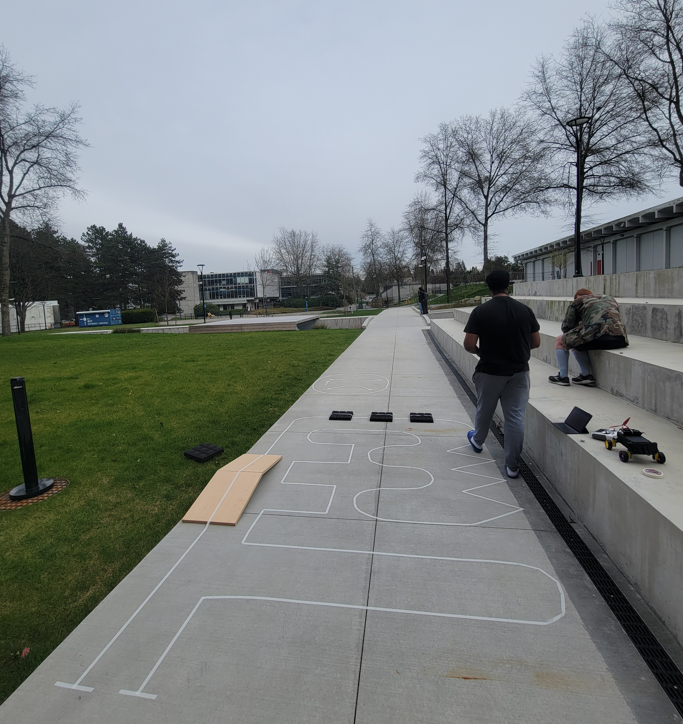
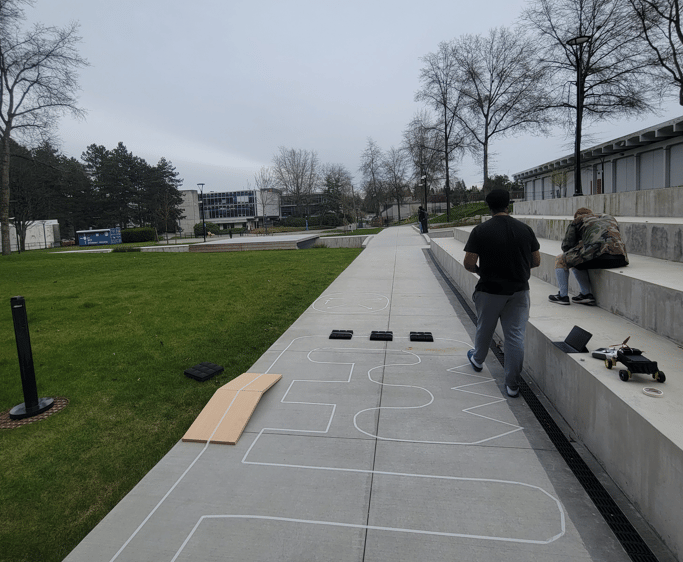
Prepared and facilitated pre-competition practice sessions to help team members get ready and build momentum before the event.
Challenge 2: Fixing a Weak Mechanical Foundation Before Final Integration
Situation: An Unstable Physical Build Near the Deadline
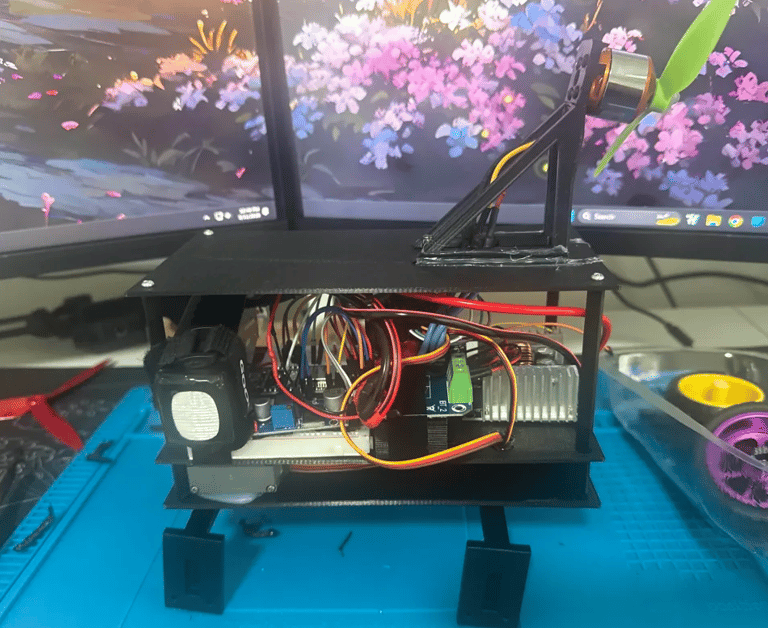
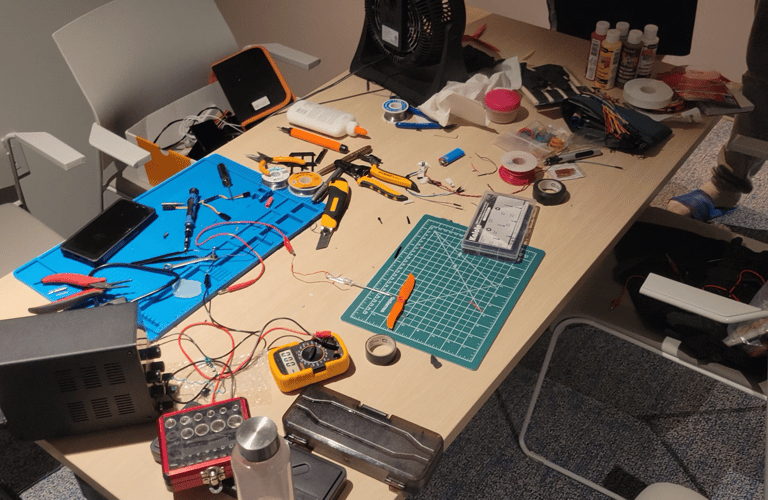
All team members had different levels of project experience. Another member had taken the lead on the physical build, but a few days before the competition, the structure was still not at a competition-ready standard.
This created a major integration risk. If we added wiring, electronics, and competition mechanisms onto an unstable foundation, the robot would likely fail during the competition.
Decision: Rebuilding Instead of Patching
At that point, we had two options:
patch the existing frame and hope it would survive the competition
spend extra time properly rebuilding the foundation, despite the heavy school workload
Since the team had already invested significant effort in the project up to this point, carelessly finishing the build could have wasted that work. I decided to step in and take responsibility for the rebuild because the mechanical structure had become the main risk to the entire system.
Thankfully, several team members supported the final rebuild, and we completed the reconstruction in one day.
Result: A Competition-Ready Physical Structure
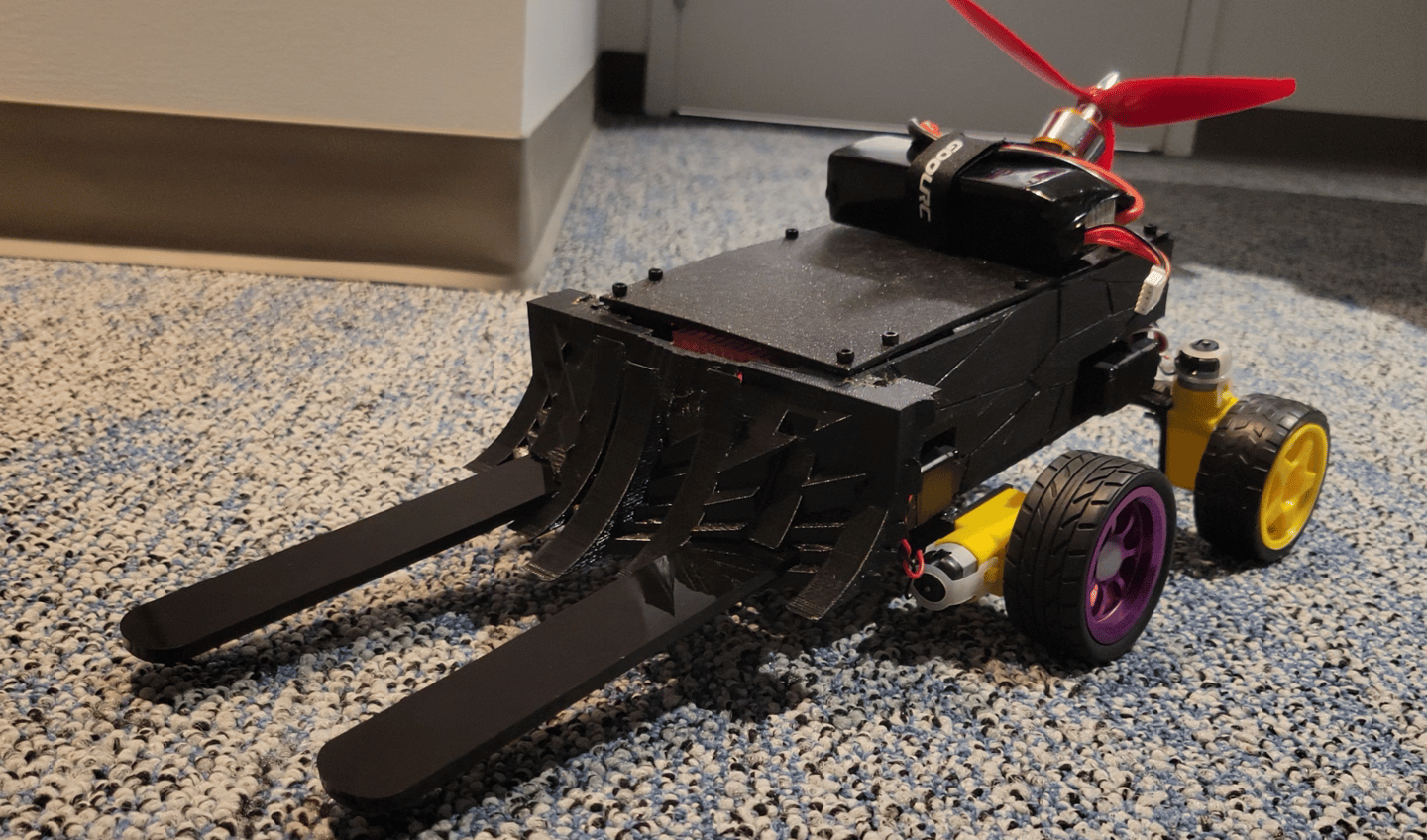
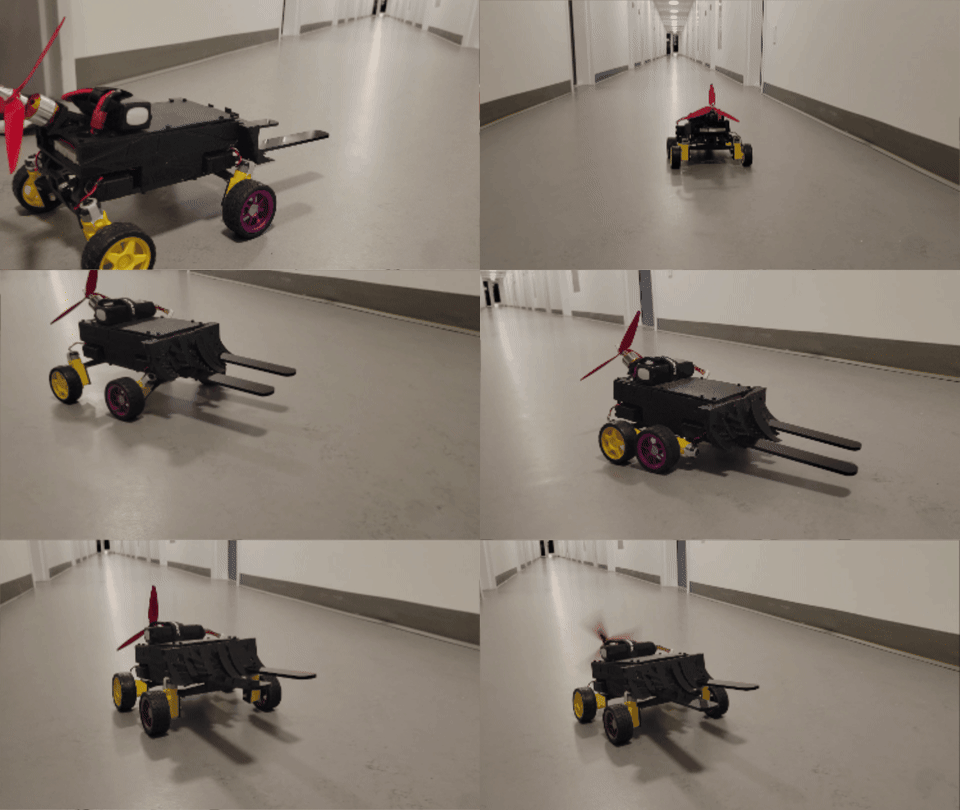
The rebuilt robot had a stronger, more reliable structure for supporting the rest of the system.
As a result, the structure lasted through the entire competition. It supported the major systems, withstood repeated operation, and avoided significant structural failure during the event.
Challenge 3: Turning Limited Hardware Into a Multi-Event Competition Robot
Competing Across Events With Different Physical Demands
The robot had to compete in obstacle course, sumo battle, and drag race events, but the standard-kit drivetrain was limited in power and mechanical capability. Each event created a different performance demand:
the obstacle course required clearance and terrain adaptability
the sumo battle required low positioning, pushing force, and durability
the drag race required straight-line control and stable acceleration
In other words, the robot had to do more than simply move. It had to behave reliably across very different competition conditions.
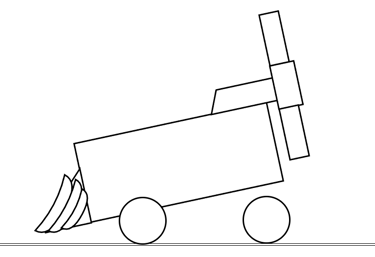
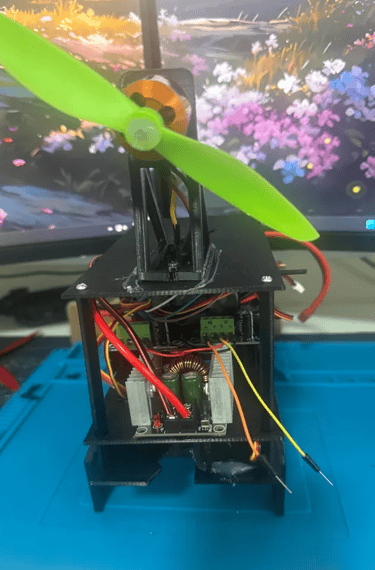
Adding Fan Thrust and Adjustable Wheel Geometry
To compensate for the limited drivetrain, we added two competition-specific mechanisms:
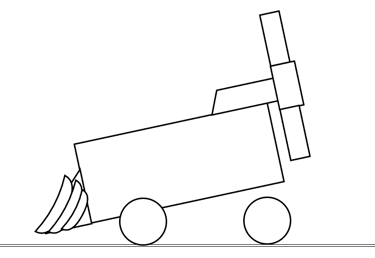
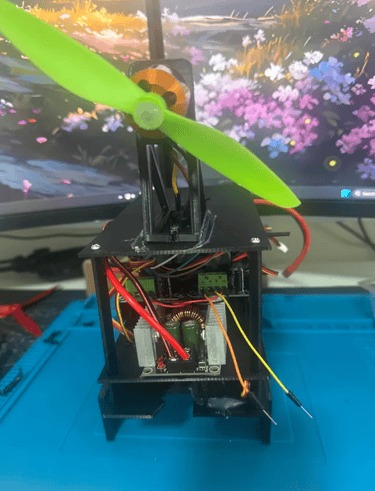
a rear fan for additional thrust
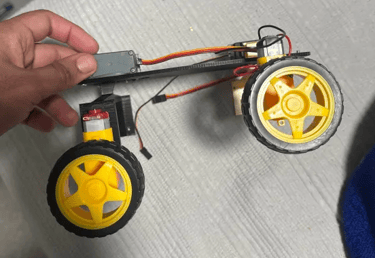
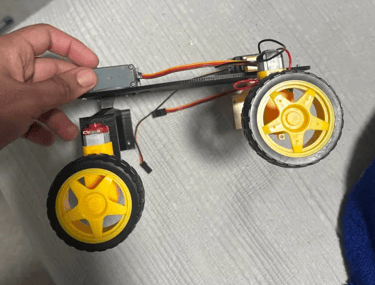
a servo-driven wheel system to adjust the robot’s posture
The adjustable wheel geometry helped the robot raise its clearance for steep obstacle sections and lower its front position for sumo battle. Combined with the rear fan, these additions helped turn the basic RC platform into a more competitive robot.
Building Power Delivery With Reliability and Safety in Mind
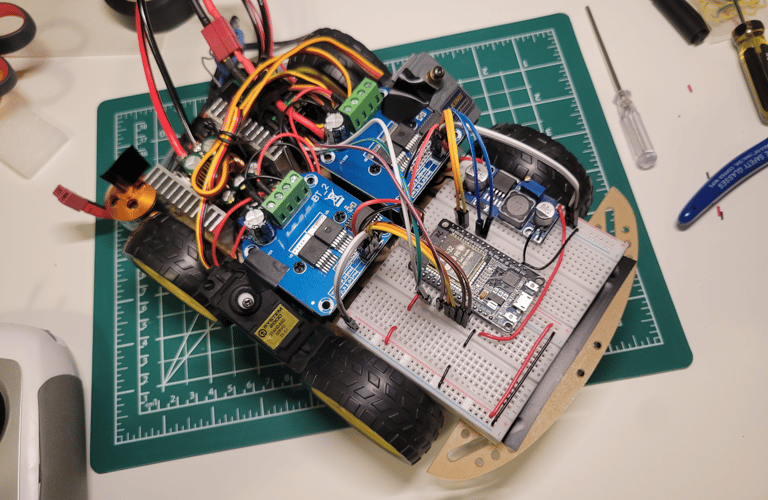
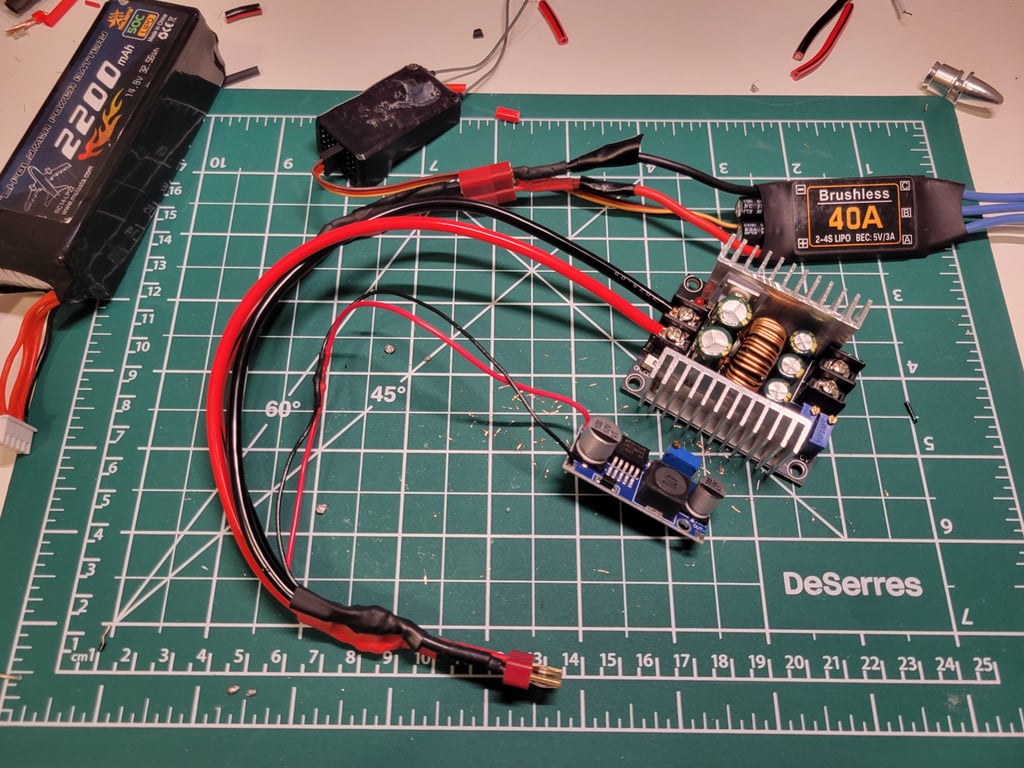
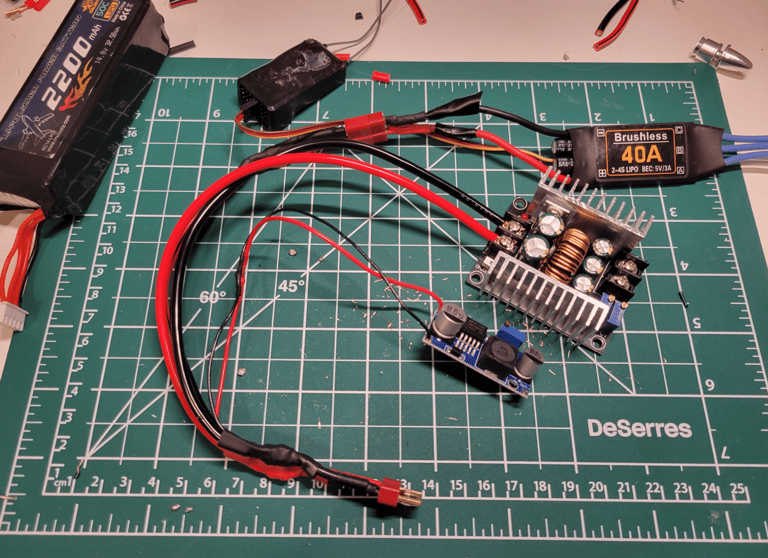
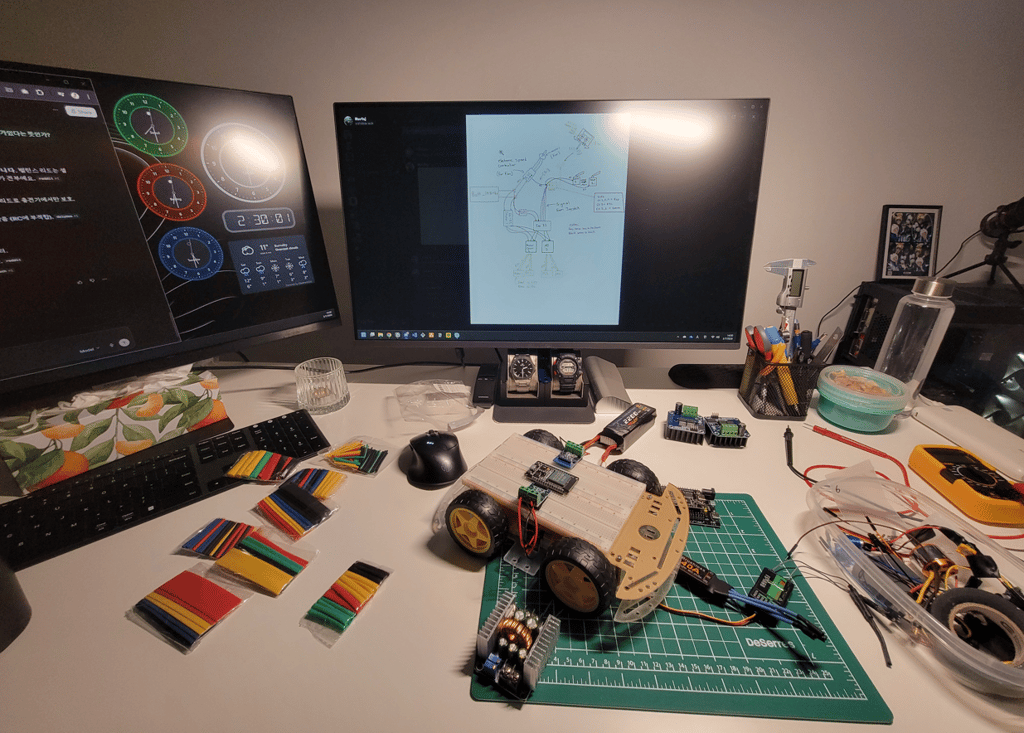
Because the robot used a LiPo battery over 16V to power the fan, motors, ESP32, receiver, and motor drivers, power delivery became both a reliability issue and a safety issue. A wiring error, a short circuit, or an overloaded component could damage the system or pose a fire risk, so I had to approach the electrical work carefully.
To make the power system safer and more reliable, I:
used DC-DC buck converters to supply appropriate voltage levels to different components
soldered and insulated high-current wiring to reduce loose connections and short-circuit risk
organized power distribution so the fan, motors, controller, receiver, and logic electronics could operate from the same battery system
monitored for overheating, shorts, unstable behaviour, or component damage during testing
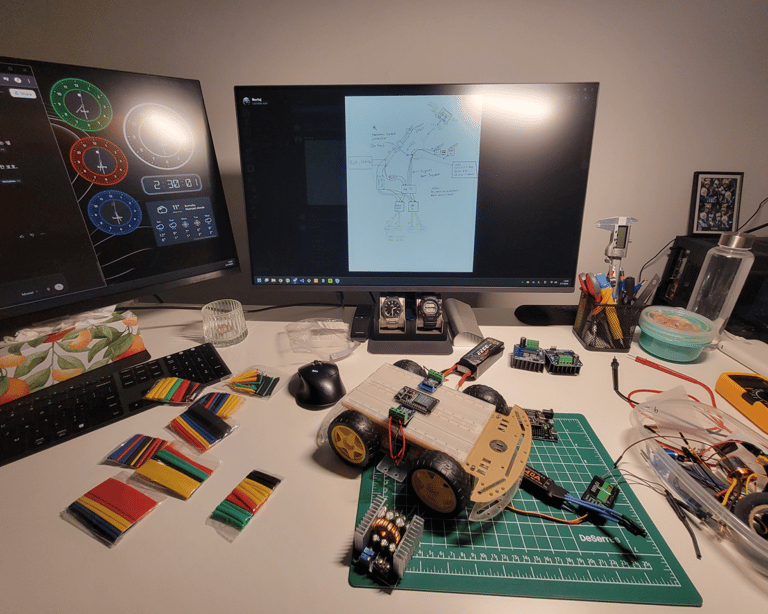
Tuning Control Behaviour for Real Competition Conditions
The robot also needed to feel stable and predictable for the driver, not just respond during basic testing. While testing the drivetrain, I adjusted the control behaviour by:
limiting how quickly motor output could change per control cycle
reducing abrupt acceleration and sudden speed changes
adding a controller deadzone to ignore small joystick noise or accidental input
After this tuning, the robot accelerated more smoothly, responded more predictably, and did not require major control adjustments again before the competition.
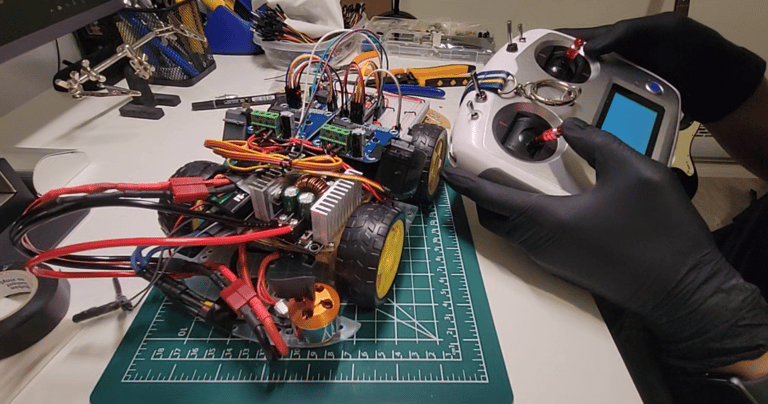
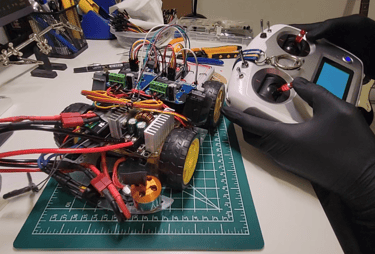
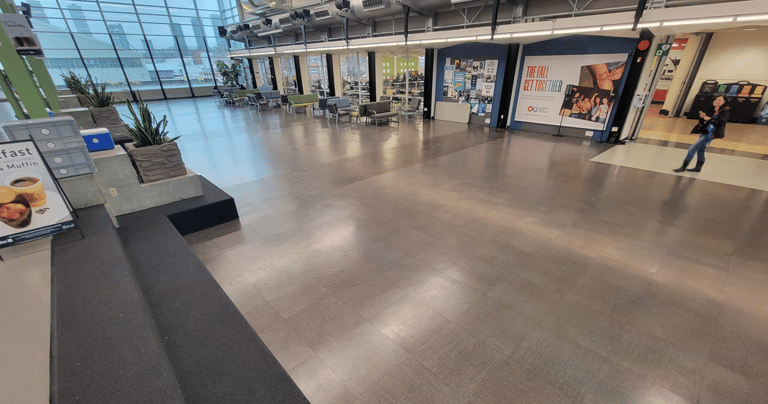
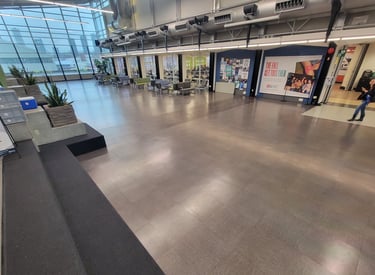
Checked the actual competition floor condition and adjusted the control behavior to match the driving environment.
Conclusion
Outcome
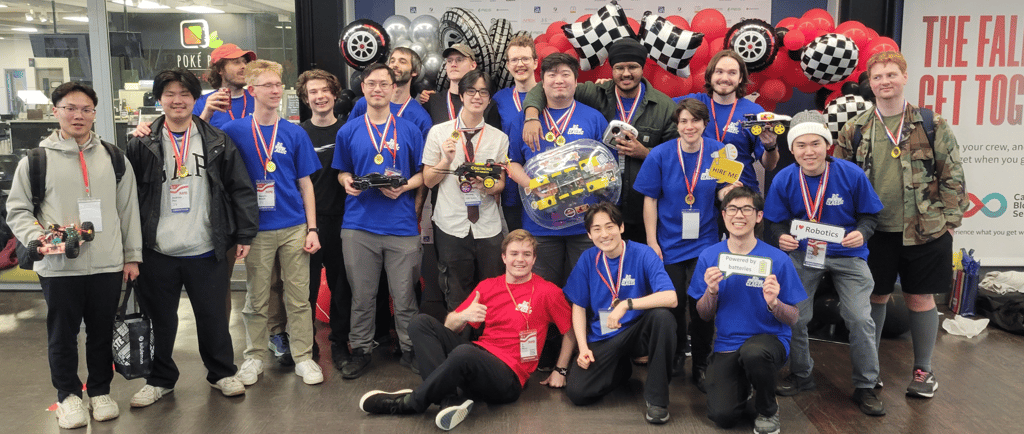
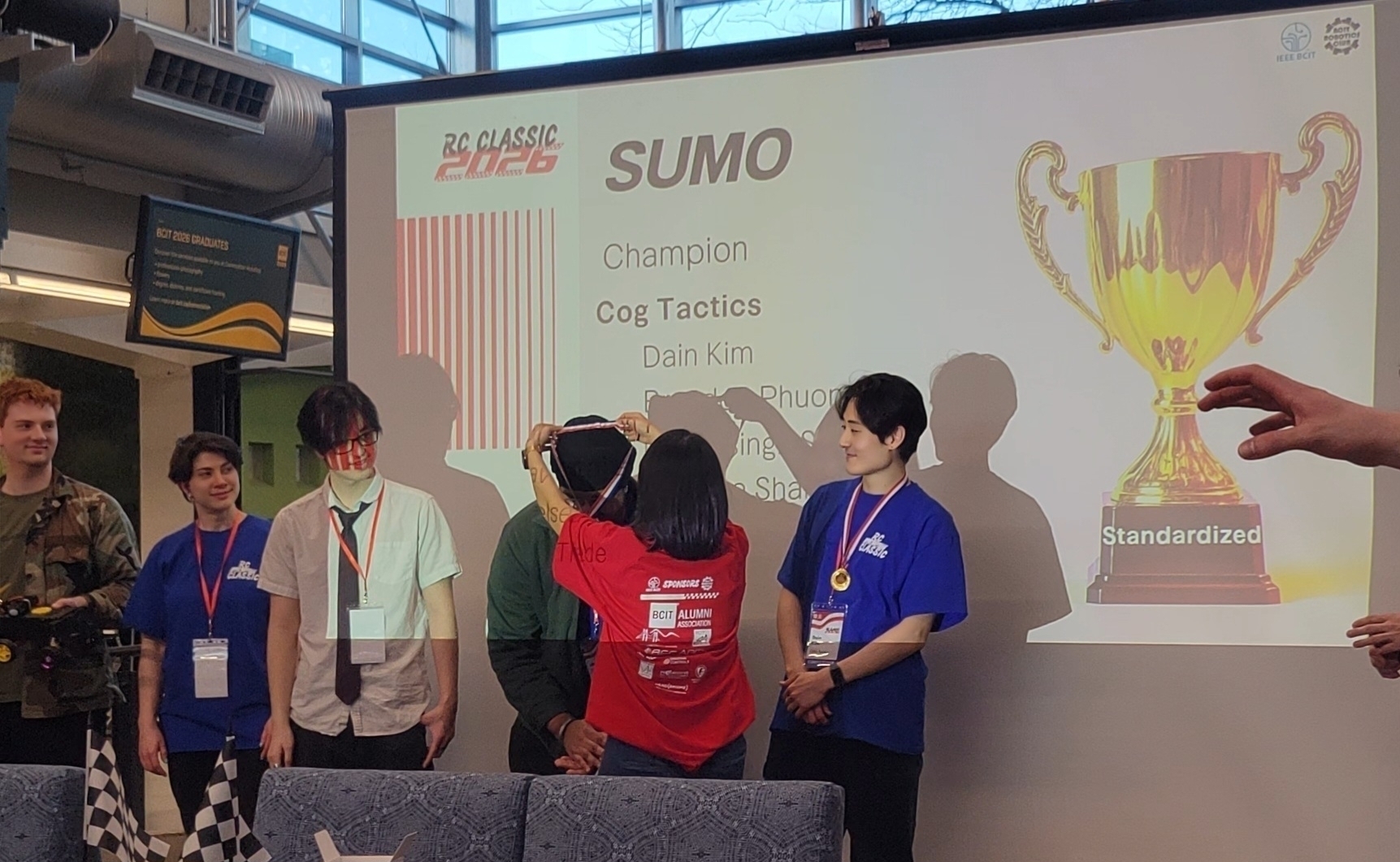
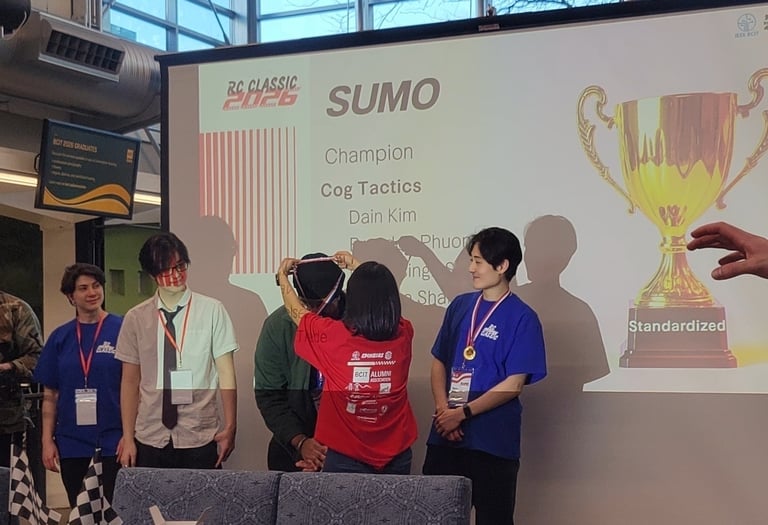
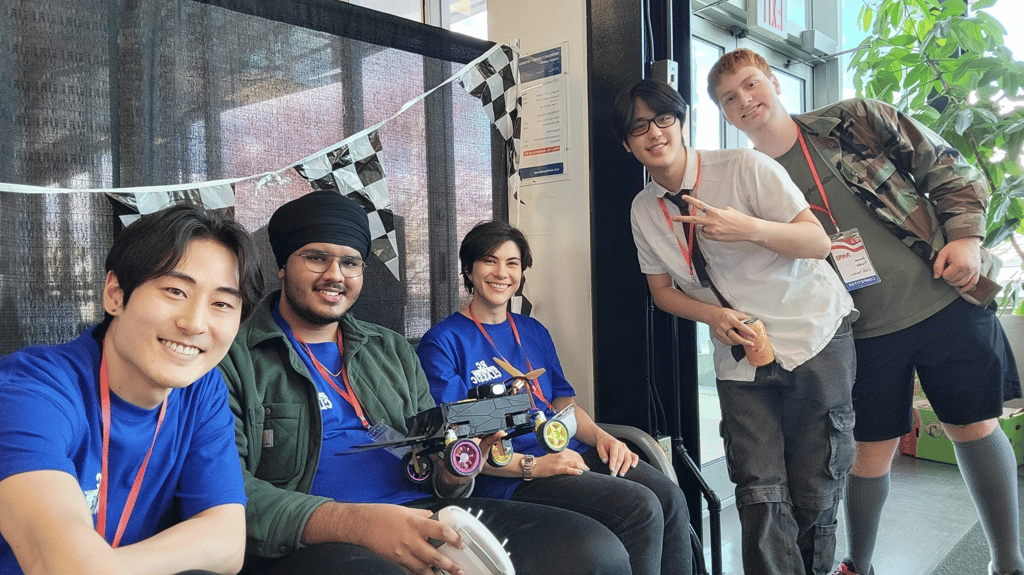
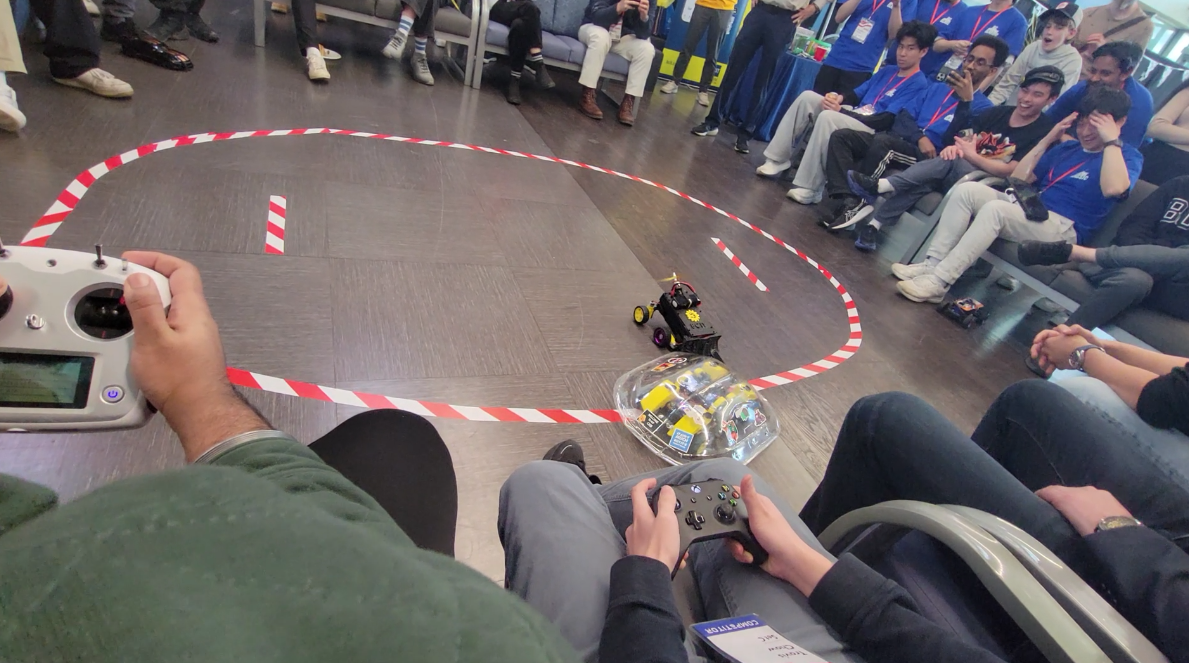
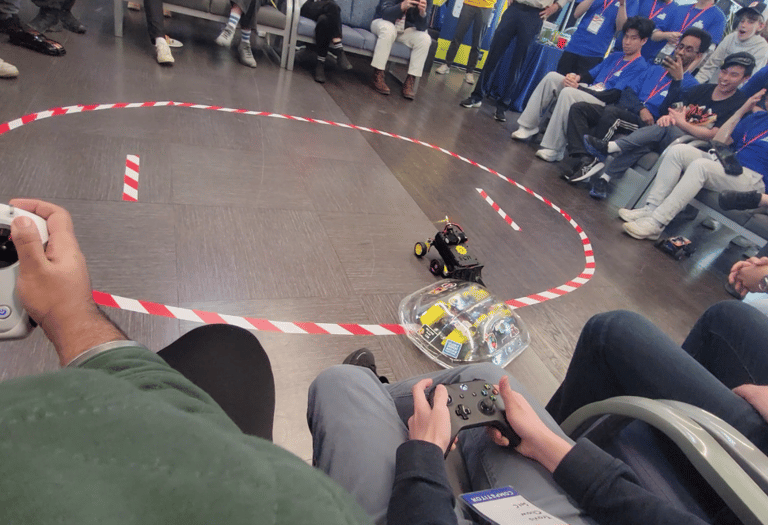
Despite the limited timeline, constrained hardware, and uneven team engagement, our team completed a functional competition robot that performed successfully in multiple events. The robot won first place in the sumo battle, placed second in the obstacle course, and remained operational after the competition, which reflected the durability of the final build.
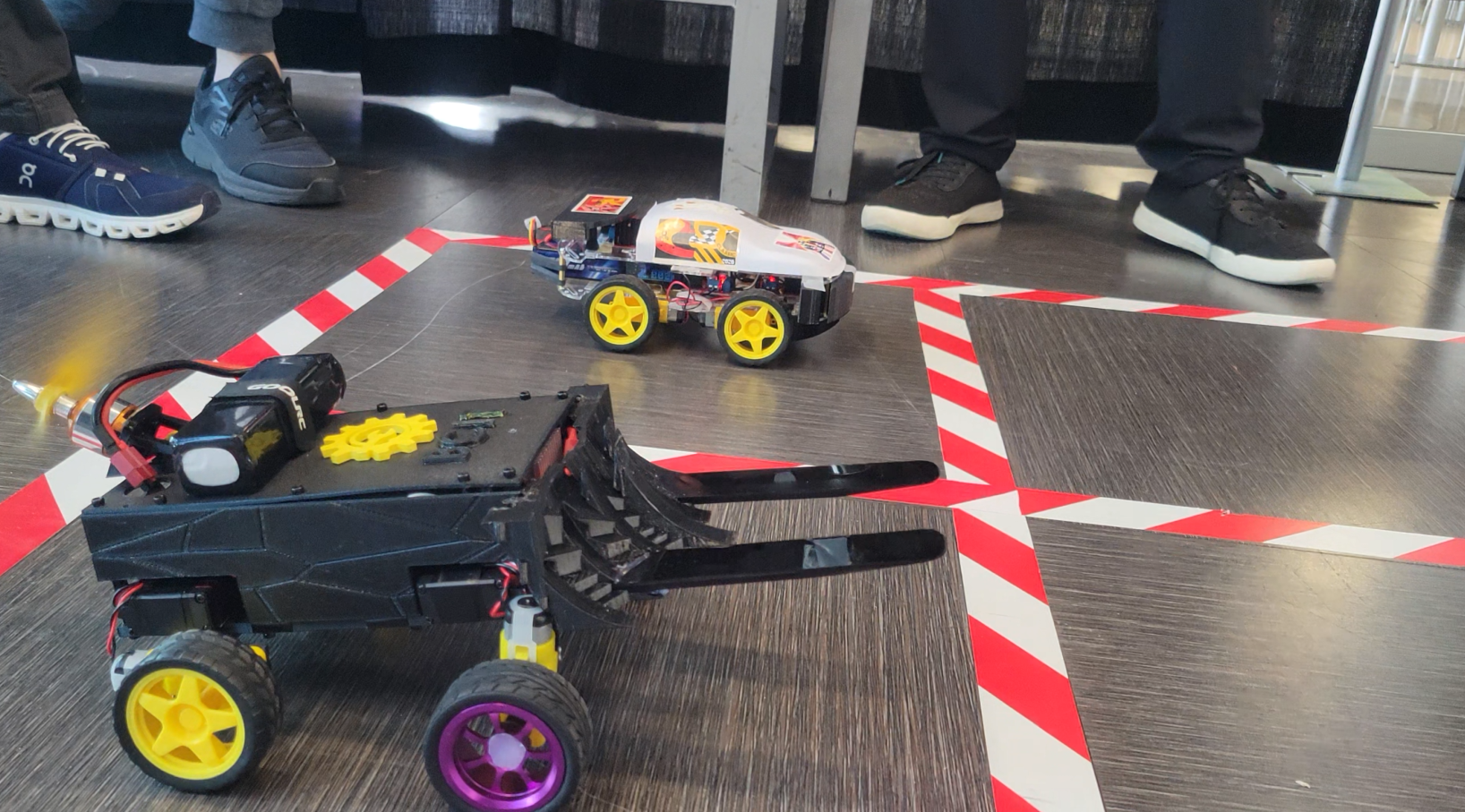
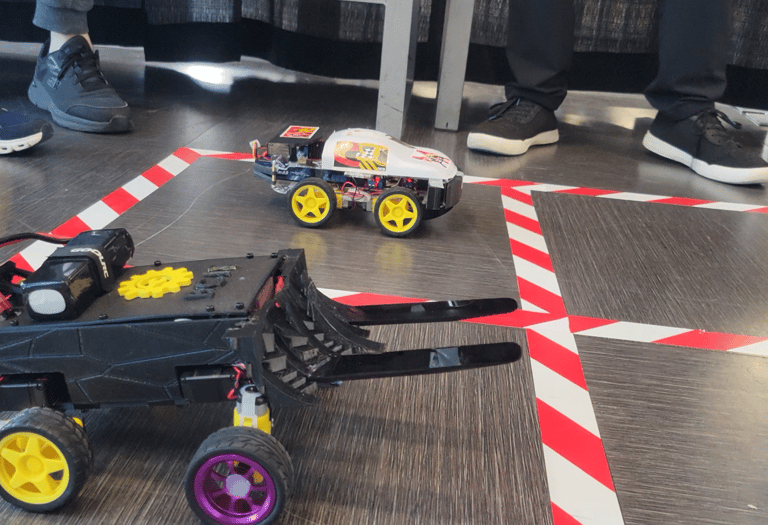
Won first place in the sumo battle, placed second in the obstacle course
Key Lesson
The most valuable lesson from this project was that ideas alone do not carry much weight in engineering. An idea only becomes meaningful when someone is willing to build it, test it, fix it, and carry it through to a working result.
This project reinforced the importance of ownership, execution, and quality standards in team-based engineering work.